Nguyen Van Anh (1983) — vodič kroz gradove koje je istorija lomila / A Guide Through Cities Shaped by History
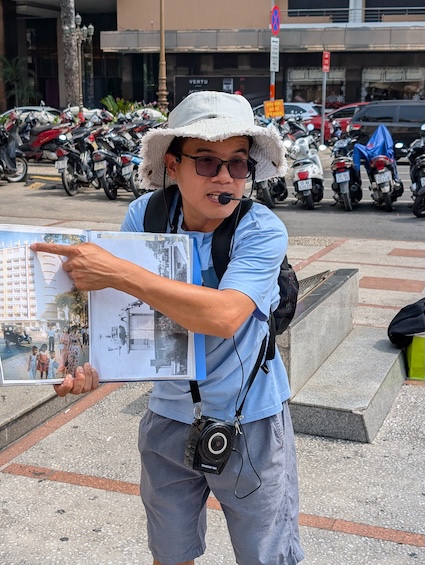 Naš vodič u Ho Ši Minu, pripada generaciji koja nije doživela rat, ali živi njegove posledice. Njegova priča nije samo lična biografija, ona je svedočanstvo o tome kako se istorija ugrađuje u identitet grada, porodice i pojedinca, čak i kada se o njoj govori tiho ili nikako.
Najintrigantniji okvir za razumevanje njegove priče, ali i savremenog Vijetnama, nameće se sam od sebe: poređenje Sajgona 1975. i Beograda 1945. godine.
Dva grada, dva „oslobođenja“, jedan obrazac vlasti
U oba grada komunisti su ušli kao pobednici. U Sajgon su 1975. ušle trupe sa severa, iz Hanoja — simbolički zatvarajući jedno poglavlje Vijetnamskog rata i otvarajući drugo, tiše, ali dugotrajnije. U Beograd su 1945. ušli komunisti iz cele Jugoslavija, pod vođstvom Josipa Broza Tita, najavljujući novo društvo i novi poredak. U oba slučaja, „oslobođenje“ je značilo potpunu kontrolu grada i države. Razlika je, međutim, bila u odgovoru stanovništva.
Egzodus i ćutanje
Iz Sajgona je, nakon 1975, otišlo oko tri miliona ljudi — uglavnom morem. Taj egzodus, danas poznat kroz pojam boat people, imao je jednu od najmračnijih bilansi 20. veka: procenjuje se da se oko milion ljudi utopilo. More Južnog kineskog mora postalo je masovna grobnica onih koji nisu želeli „prevaspitavanje“.
Beograd nije doživeo masovno iseljavanje. Grad je ostao — ali je njegova omladina poslata na Sremski front, a veliki deo predratne inteligencije, privrednika i „naprednih ljudi“ bio je ponižen, opljačkan, likvidiran ili trajno marginalizovan. Teror nije bio spektakularan, ali je bio sistematičan.
U oba grada cena stabilnosti bila je slom društvene elite.
Različiti putevi komunizma
Jugoslavija je, nakon decenije brutalnog učvršćivanja vlasti, napravila istorijski zaokret. Tito je stvorio državu između kapitalizma i komunizma, otvorenu prema Zapadu, sa relativno slobodnim kretanjem ljudi, ideja i robe. Period od šezdesetih do osamdesetih godina mnogi i danas pamte kao najbolje decenije života, ne samo materijalno, već i civilizacijski.
Vijetnam je izabrao suprotan put. Vijetkong je sistematski radio na ideološkom prevaspitavanju stanovništva Sajgona, grad je preimenovan u Ho Ši Min, a južni deo zemlje držan je pod strogom političkom i ekonomskom kontrolom sve do oko 2010. godine. Razvoj je bio spor, ograničen i defanzivan.
Kasno otvaranje i ubrzani procvat
Tek su novi lideri Vijetnama shvatili da zatvoreni sistem vodi u trajno zaostajanje. Otvaranje zemlje ka investicijama, turizmu i globalnoj ekonomiji dovelo je do onoga čemu danas svedočimo. Vijetnam je jedna od najperspektivnijih ekonomija sveta, a Ho Ši Min njen motor.
Ironija istorije je očigledna.
Jugoslavija se raspala na sedam država. Srbija je, za razliku od Vijetnama, prošla kroz ratove, sankcije, privatizacione pljačke, demografsku katastrofu i dugotrajnu tranzicionu iscrpljenost — i danas spada među najsiromašnije zemlje Evrope.
Da Nguyen Van Anh zna ovu paralelu do kraja, verovatno ne bi mislio da su Vijetnamci prošli najgore.
Posebnu slojevitost njegovom portretu daje činjenica da je obrazovan od katoličkih misionara, sa iskustvom boravka u Indonezija i Filipini, i sa iskrenom željom da postane katolički sveštenik. U zemlji u kojoj je religija decenijama bila potiskivana, takva biografija nije samo lična odluka, već tiha pobuna.
On grad pokazuje sa ideološkom strašću, ali sa razumevanjem, govori o ratu, o komunizmu i o Zapadu, verovatno zato njegova priča ima težinu. Ko zna, možda ćemo jednog dana moći da kažemo da nam je Ho Chi Minh City pokazao budućeg papu.
♥
Our guide in Ho Chi Minh City, belongs to a generation that did not experience war firsthand, yet lives permanently in its shadow. His story is not merely a personal biography; it is a testimony to how history embeds itself into the identity of a city, a family, and an individual — even when it is spoken of quietly, or not at all.
The most compelling framework for understanding both his life and contemporary Vietnam presents itself almost inevitably: a comparison between Saigon in 1975 and Belgrade in 1945.
Two Cities, Two “Liberations,” One Pattern of Power
In both cities, communists entered as victors.
In Saigon, troops from the North, from Hanoi, entered in 1975 — symbolically closing one chapter of the Vietnam War and opening another, quieter yet far more enduring. In Belgrade, in 1945, communists from across Yugoslavia, under the leadership of Josip Broz Tito, arrived proclaiming a new society and a new order.
In both cases, “liberation” meant total control of the city and the country.
The difference lay in how the population responded.
Exodus and Silence
After 1975, around three million people left Saigon, mostly by sea. This exodus — now known through the term boat people — resulted in one of the darkest human tragedies of the 20th century: an estimated one million people drowned. The waters of the South China Sea became a mass grave for those unwilling to undergo “re-education.”
Belgrade did not experience mass emigration. The city remained — but its youth were sent to the Srem Front, while much of the pre-war intelligentsia, entrepreneurs, and progressive citizens were humiliated, dispossessed, executed, or permanently marginalized. The terror was not spectacular, but it was systematic.
In both cities, the price of stability was the destruction of the social elite.
Divergent Paths of Communism
After a decade of brutal consolidation of power, Yugoslavia made a historic turn. Tito created a country between capitalism and communism, open to the West, with relatively free movement of people, ideas, and goods. The period from the 1960s to the 1980s is still remembered by many as the best era of life — not only materially, but civilizationally.
Vietnam chose the opposite path. The Viet Cong systematically worked on ideological re-education of the population in Saigon, renamed the city Ho Chi Minh City, and kept the southern part of the country under strict political and economic control until roughly 2010. Development was slow, limited, and defensive.
Late Opening and Accelerated Growth
Only new generations of Vietnamese leaders realized that a closed system leads to permanent stagnation. Opening the country to investment, tourism, and the global economy produced what we witness today: Vietnam is one of the world’s most promising economies, with Ho Chi Minh City as its driving force.
The irony of history is striking.
Yugoslavia collapsed into seven states. Serbia, unlike Vietnam, passed through wars, sanctions, privatization-driven plunder, demographic decline, and prolonged transitional exhaustion — and today ranks among the poorest countries in Europe.
If Nguyen Van Anh were fully aware of this parallel, he would probably not believe that the Vietnamese had fared the worst.
An additional layer of depth to his portrait lies in the fact that he was educated by Catholic missionaries, with experience living in Indonesia and Philippines, and with a sincere desire to become a Catholic priest. In a country where religion was suppressed for decades, such a biography is not merely a personal choice — it is a quiet form of dissent.
He presents the city with ideological passion, yet with understanding. He speaks of war, communism and West precisely why his story carries weight.
Who knows — perhaps one day we may say that Ho Chi Minh City introduced us to a future pope.